

 CLICK TO CALL
Dental Health Blog | St. Jacobs Dental Care
How to Care for Dentures So They Fit Comfortably and Last Longer
October 18, 2026 / Dentistry
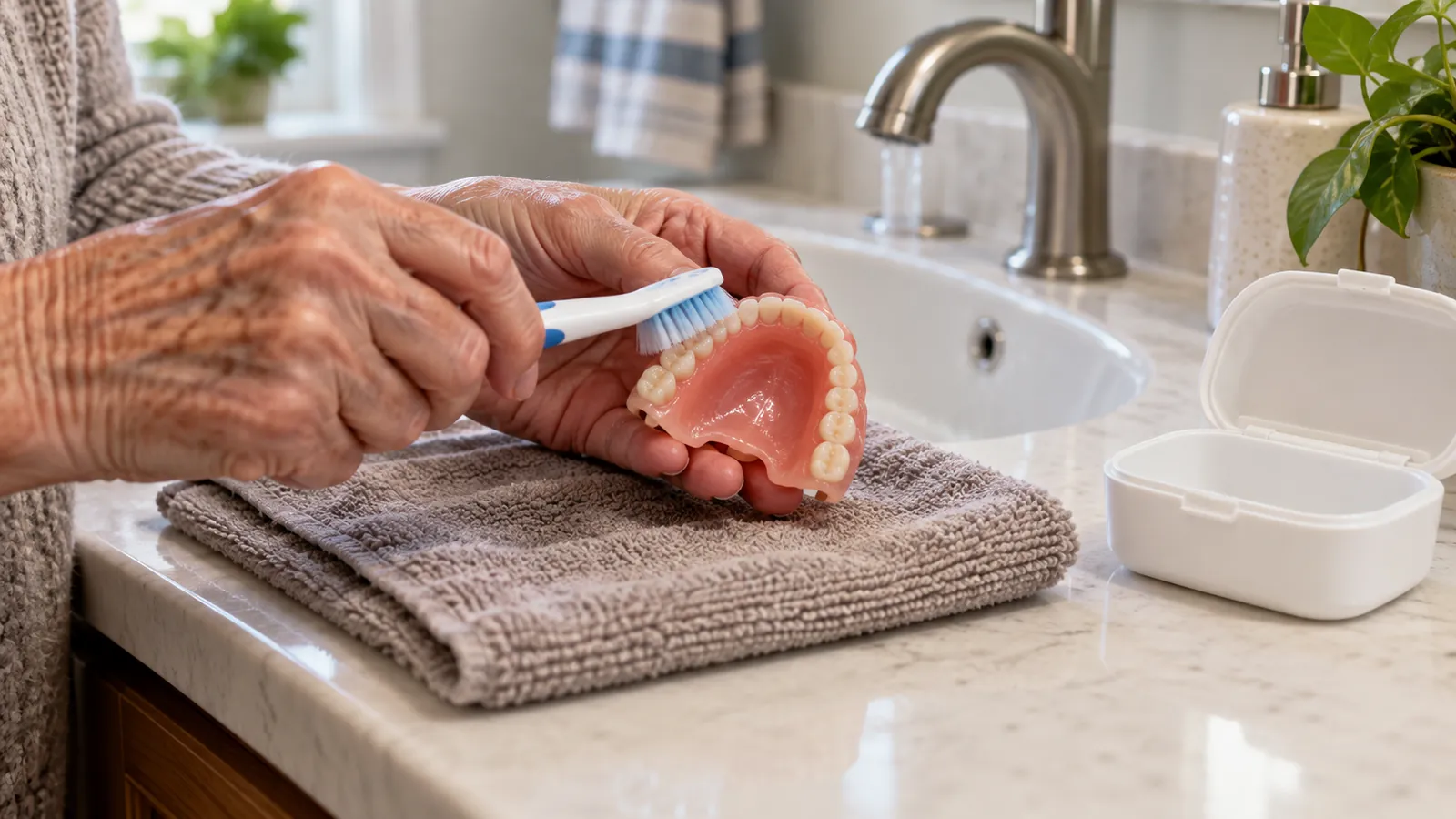
Dentures need daily care to stay clean, comfortable, and functional. A good denture routine usually includes cleaning them every day, handling them carefully, caring for your gums and mouth, storing them properly when they are out, and seeing a dentist if the fit starts to change.
If your dentures feel loose, painful, cracked, or harder to wear than usual, it is a good idea to have them assessed rather than trying to adjust them at home. Denture fit can change over time as your mouth changes, and a dentist can help you understand what may be causing the problem.
For patients in St. Jacobs who wear dentures or are considering them, St. Jacobs Dental Care provides information about dentures as one option for replacing missing teeth.
Why Denture Care Matters for Comfort and Fit
Denture care matters because dentures are used every day for eating, speaking, smiling, and supporting normal oral function. Like natural teeth, dentures can collect food debris, plaque, and stains. The tissues under and around dentures also need regular care.
Clean dentures may feel more comfortable and may be easier to wear consistently. Poor cleaning habits, skipping oral tissue care, or ignoring changes in fit can lead to irritation, sore spots, odour, or difficulty chewing.
Fit can also change over time. The shape of the gums and jaw can shift after tooth loss, and dentures that once felt comfortable may begin to rub, rock, or feel less secure. That does not always mean the denture needs to be replaced, but it does mean the fit should be checked by a dental professional.
How to Clean Dentures Every Day
Clean dentures every day using a gentle routine that removes food and buildup without damaging the denture. Dentures are not the same as natural teeth, so they should be cleaned with care.
A simple daily routine may include:
- Removing and rinsing dentures after eating when possible.
- Handling dentures over a folded towel or sink filled with water so they are less likely to break if dropped.
- Brushing all denture surfaces with a denture brush or soft brush.
- Using a cleaner recommended by your dentist, or following approved denture cleaning instructions.
- Rinsing dentures thoroughly before placing them back in your mouth.
- Storing dentures as directed when they are not being worn.
Avoid using hot water, harsh cleaners, abrasive toothpaste, or stiff brushes unless your dentist specifically recommends them. Heat can affect denture shape, and abrasive products may scratch the denture surface.
If stains, odour, or buildup do not improve with routine cleaning, do not scrape or file the denture. A dentist can assess whether professional cleaning, adjustment, or another option may be appropriate.
How to Care for Your Gums and Mouth When You Wear Dentures
Your mouth still needs daily care even if some or all natural teeth are missing. Dentures sit against oral tissues, so the gums, tongue, cheeks, palate, and any remaining teeth need attention.
A good oral care routine may include gently cleaning your gums and tongue with a soft toothbrush or damp cloth, brushing any remaining natural teeth, and rinsing your mouth as directed by your dentist. If you have partial dentures, the teeth that support or sit near the denture need consistent cleaning because plaque can collect around clasps and edges.
Regular dental visits still matter for denture wearers. A dental visit allows the dentist to check oral tissues, assess fit, review hygiene, and look for irritation or other concerns. This is where preventive dentistry can support long-term oral health, even for patients who wear full or partial dentures.
Contact a dental office if you notice persistent sore spots, bleeding, swelling, white patches, bad taste, sudden discomfort, or dentures that no longer feel stable. These concerns may need professional assessment.
What Should You Avoid With Dentures?
Avoid habits that can damage dentures, irritate your mouth, or make fit issues worse. A few small habits can make a meaningful difference in day-to-day comfort.
Try to avoid:
- Adjusting, bending, filing, or repairing dentures at home.
- Sleeping in dentures unless your dentist has told you to do so.
- Using hot water to clean or soak dentures.
- Using bleach, abrasive toothpaste, or harsh household cleaners.
- Chewing very hard or sticky foods if they cause movement or discomfort.
- Ignoring sore spots or looseness.
- Wearing cracked or damaged dentures without having them checked.
At-home adjustments can make the denture fit worse or damage it beyond simple correction. If something feels sharp, unstable, or painful, stop trying to force the denture to work and contact a dental professional.
What If Your Dentures Feel Loose or Uncomfortable?
Loose or uncomfortable dentures should be assessed by a dentist. Dentures may feel different over time because of changes in the gums, jaw, bite, or the denture itself.
Signs that dentures may need attention include:
- Rocking or slipping while speaking or eating.
- Sore spots that keep returning.
- Trouble chewing foods that used to feel manageable.
- Clicking sounds when talking.
- Cracks, chips, or worn areas.
- Food getting trapped more often.
- A sudden change in comfort or stability.
Do not assume that looseness always means you need new dentures. A dentist can look at the denture, your mouth, and your bite before discussing possible next steps. Depending on the situation, the conversation may involve fit, wear, oral tissue health, broader restorative dentistry needs, or other tooth replacement considerations.
Questions to Ask When Looking for Denture Care
If you are seeing a dentist about denture care, comfort, or fit, it helps to bring clear questions. This can make the appointment more useful and reduce guesswork.
Useful questions may include:
- How should I clean my specific type of denture?
- Should I remove my dentures overnight?
- Are there signs that my dentures are not fitting properly?
- Could sore spots be related to fit, oral tissue irritation, or something else?
- How often should my dentures and mouth be checked?
- What should I do if my denture cracks or feels loose?
- Are there other tooth replacement options I should understand?
If you use denture adhesive, ask how often it should be used and whether the amount you need suggests a fit concern. Adhesive may help in some situations, but it should not be used to hide an ongoing problem with comfort or stability.
Frequently Asked Questions About Dentures in St. Jacobs
Dentures should usually be cleaned every day. Many people also rinse them after meals when possible. Daily cleaning helps remove food debris, plaque, and buildup that can affect comfort, appearance, and freshness.
Many people are advised to remove dentures while sleeping so the oral tissues can rest, but you should follow your dentist’s instructions for your specific situation. If you are unsure, ask your dentist what is appropriate for your dentures and oral health needs.
If your dentures feel loose, have them checked by a dentist. Fit can change over time, and a professional assessment can help identify whether the issue relates to the denture, your gums, your bite, or another concern.
You should not try to fix, file, bend, or adjust dentures yourself. At-home repairs can damage the denture or make fit problems worse. Contact a dental professional if a denture cracks, breaks, rubs, or no longer feels secure.
Dentures may need professional attention if they feel loose, cause recurring sore spots, look worn or cracked, or make eating and speaking harder than before. A dentist can assess the fit and discuss what options may make sense for your situation.
Talk to St. Jacobs Dental Care About Denture Care and Fit
Dentures should feel manageable in daily life. If your dentures are uncomfortable, difficult to clean, loose, damaged, or no longer fitting the way they used to, it is worth asking a dentist to take a look.
St. Jacobs Dental Care can speak with patients about denture care, fit concerns, and tooth replacement options. To discuss your questions, contact St. Jacobs Dental Care and request an appointment.