

 CLICK TO CALL
Dental Health Blog | St. Jacobs Dental Care
How to Care for a Dental Bridge So It Lasts Longer
July 21, 2026 / Restorative Dentistry
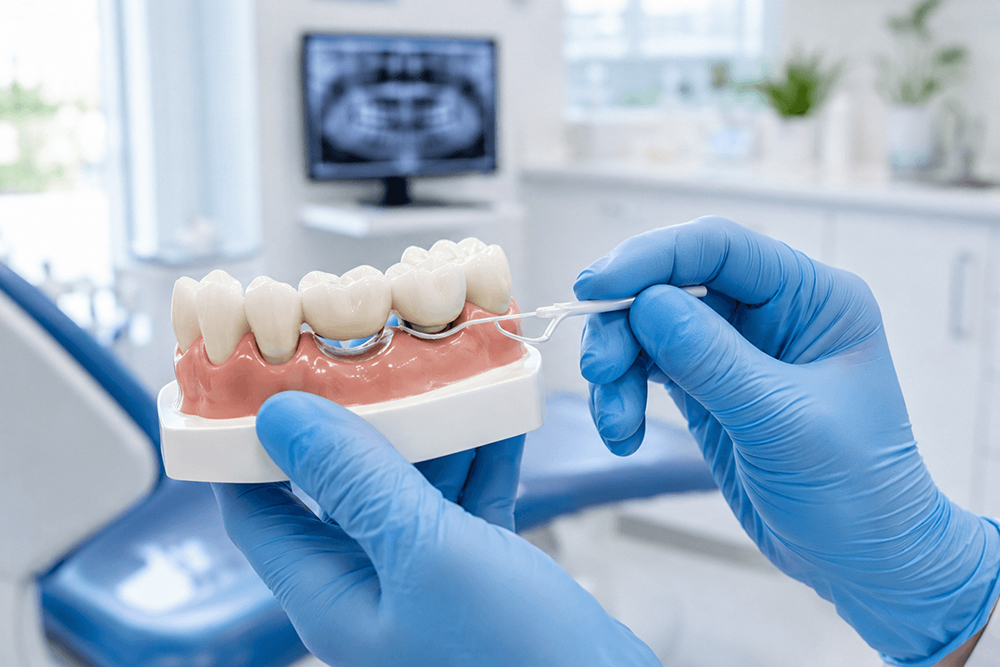
Daily cleaning, careful eating habits, and regular dental visits can help protect a dental bridge. Although the bridge itself cannot develop a cavity, the natural teeth supporting it are still vulnerable to plaque, decay, and gum problems. The space beneath the replacement tooth also needs attention because food and bacteria can collect there.
A dental bridge should feel secure and comfortable during normal use. If yours becomes loose, painful, damaged, or unusually difficult to clean, arrange a dental assessment rather than waiting for the problem to improve on its own.
Why Dental Bridge Care Matters
A dental bridge replaces one or more missing teeth by filling the open space with an artificial tooth or teeth. Depending on its design, it may be supported by crowns placed over neighbouring teeth or by dental implants. You can learn more about dental crowns and bridges and how they may be used to restore missing or damaged teeth.
Once a bridge is in place, its edges and supporting teeth require consistent care. Plaque can collect where the restoration meets the gumline, while food can become trapped beneath the replacement tooth.
Without proper cleaning, the gums around a bridge may become red, swollen, tender, or prone to bleeding. Decay may also develop in a supporting tooth. Problems affecting these teeth or the surrounding gums may weaken the foundation of the bridge.
Daily dental bridge care is therefore about more than keeping the restoration looking clean. It also protects the structures that allow it to function comfortably.
Daily Cleaning Tips for a Dental Bridge
Brush twice daily using a soft-bristled toothbrush and fluoride toothpaste, unless your dentist has recommended something different. Clean the chewing surfaces, gumline, back teeth, and areas where the bridge meets your natural teeth.
Use gentle, controlled movements near the bridge. Brushing too aggressively does not necessarily remove more plaque and may irritate the gums. An electric toothbrush can help some people, but a manual toothbrush can also work well when used carefully.
Pay particular attention to the edges of the restoration. Angle the bristles toward the gumline without pressing uncomfortably into the gums.
Brushing cleans the exposed surfaces of a bridge, but it does not fully clean beneath the replacement tooth. Your dentist or dental hygienist can recommend tools that fit underneath your bridge and show you how to use them.
An interdental brush may help clean certain spaces around the restoration. These brushes come in different sizes, so do not force one through a narrow space. A water flosser may also be helpful, particularly if you find traditional floss difficult to guide around the bridge. The best option depends on the bridge’s design and the space surrounding it.
How to Floss Around a Dental Bridge
A fixed bridge is connected, so ordinary floss cannot pass between each section as it can between natural teeth. You still need to clean underneath the replacement tooth and around the supporting teeth.
A floss threader has a firm end that helps guide floss beneath the bridge. Once the floss is in position, move it gently along the gumline and around the supporting teeth.
Super floss is another option. It typically has a stiffened end for threading and a thicker section for cleaning beneath a bridge. Whichever tool you use, avoid snapping or pulling it sharply against the gums.
When flossing:
- Guide the floss underneath instead of forcing it between joined sections.
- Move it gently along the gumline beneath the replacement tooth.
- Curve it around each supporting tooth where possible.
- Use a clean section as you move to another area.
It may take some practice before the process feels natural. If you cannot pass floss beneath the bridge, food continues to become trapped, or the area bleeds regularly despite gentle cleaning, ask your dental team for help.
Habits That Can Help Protect Your Bridge
A bridge is designed for normal chewing, but excessive force can still damage it. Avoid using your teeth to open packages, tear tags, hold objects, or crack hard shells. These habits place unnecessary pressure on the bridge and its supporting teeth.
Be cautious with ice, hard candies, popcorn kernels, and similarly hard items. Biting into something extremely hard may chip or fracture restorative materials. Sticky foods can also pull against a bridge, especially if it is already loose.
You do not necessarily need to avoid every firm or chewy food. Appropriate advice depends on the bridge, its location, and the health of the supporting teeth. If eating causes discomfort or makes the bridge feel unstable, stop chewing on that area and arrange an assessment.
Grinding and clenching can also place repeated pressure on a bridge. Some people grind during sleep without realizing it. Morning jaw soreness, worn teeth, headaches, or damaged restorations are concerns worth discussing with a dentist.
Regular examinations and professional cleanings remain part of bridge care. During these visits, the dental team can assess the bridge, supporting teeth, bite, and gums. They can also remove hardened deposits that cannot be cleared at home.
Your recommended visit schedule will depend on your oral health and risk of dental disease. If a tooth becomes weakened or damaged, restorative dentistry may include different forms of care based on what an examination reveals.
When to Contact a Dentist About Your Bridge
A bridge should not rock, shift, or feel as though it is lifting away from its supporting teeth. Contact a dentist if you notice movement, even if the bridge has not completely detached. Continuing to chew on it could worsen the problem.
New, persistent, or increasing discomfort around an existing bridge should also be assessed. The cause could involve the gums, bite, supporting teeth, or restoration itself.
Arrange a dental visit if you notice:
- A chipped, cracked, or visibly damaged bridge
- Swelling, redness, or repeated bleeding
- A persistent bad taste or odour
- Food becoming trapped in a new area
- Pain or pressure while biting
- New sensitivity around a supporting tooth
- A change in how your teeth meet
- Difficulty cleaning beneath the bridge
Do not try to repair or reattach a bridge with household glue. If it comes out, keep it in a clean, secure container and contact a dental office. A dentist will need to examine the restoration and supporting teeth before recommending the next step.
Frequently Asked Questions About Dental Bridge Care
Can you floss under a dental bridge?
Yes. Cleaning beneath a fixed bridge is important because plaque and food can collect under the replacement tooth. Since ordinary floss cannot always pass between the connected sections, you may need a floss threader, super floss, interdental brush, or water flosser.
The appropriate tool depends on the design of your bridge. A dental hygienist can show you how to clean the area without forcing the tool or irritating the gums.
How long does a dental bridge last?
There is no guaranteed lifespan for every bridge. Its condition over time is influenced by the health of the supporting teeth and gums, daily cleaning, bite forces, grinding or clenching, diet, materials, and regular dental care.
A bridge may continue functioning for years with appropriate care, but even a well-maintained restoration can eventually require repair or replacement. Routine examinations allow a dentist to identify changes that may not be noticeable at home.
What should I do if my bridge feels loose?
Avoid chewing on that side and contact a dentist for an assessment. A loose feeling does not reveal the exact cause. The bridge, dental cement, supporting tooth, or another nearby structure may need attention.
Do not pull at the bridge or attempt to secure it yourself. If it comes out completely, store it safely and bring it to the dental office.
Talk to St. Jacobs Dental Care About Dental Bridge Care
A consistent routine can help protect your bridge, supporting teeth, and gums. Brush twice daily, clean beneath the bridge with an appropriate tool, avoid habits that place excessive force on it, and attend dental visits based on your individual needs.
If your bridge feels loose, uncomfortable, damaged, or difficult to clean, it is better to have the area examined than to guess at the cause. The same applies if you are considering a bridge and want to understand its maintenance needs.
You can contact St. Jacobs Dental Care to ask questions or request an assessment. After examining your teeth, gums, and restoration, the dental team can provide guidance based on what they find.